

Choosing a personalised textile is a real pleasure, but knowing how to look after it properly is just as important. Whether your product is personalised by embroidery or transfer, a few good practices will ensure that the colours, designs and fabric last longer? Here’s a simple, reliable guide to help you keep your items looking their best for as long as possible.
Understanding the specific features of personalised textiles
Embroidery: durable but heat-sensitive personalisation
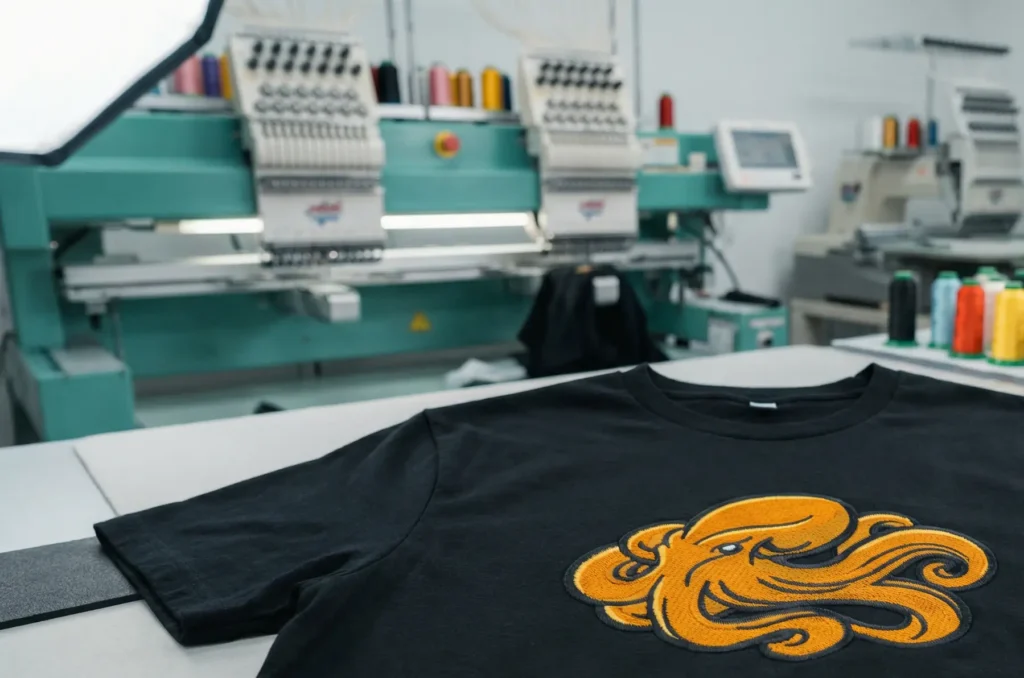
Embroidery is renowned for its strength. Threads stand up well to the test of time, but they can lose their shine if heat or rubbing is too intense. A gentle cycle is therefore the safest option for preventing colours from fading.
Textile transfer: precision and precautions
Textile transfer, on the other hand, offers excellent sharpness of visuals. However, it is more sensitive to high temperatures. The printed surface can crack or peel off if care is not taken. Hence the importance of following the washing instructions carefully.
The golden rules for a successful wash
Ideal temperature
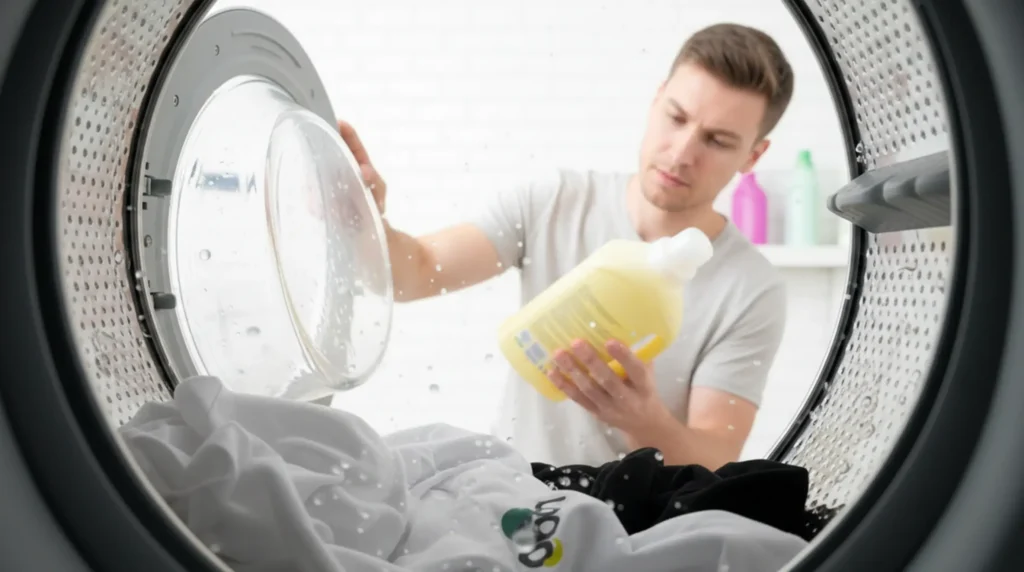
For personalised textiles, the general rule is simple: 30°C. This setting preserves both the fabric fibres and the personalisation. Above this temperature, the risk of fading increases, especially for transfers.
Preferred detergents
Choose a gentle detergent, without bleaching agents. They can damage colours and weaken textile fibres. If possible, use a liquid detergent: washing powders tend to leave residues, especially when washed at low temperatures, which can leave light marks on customised areas. And if you really want to extend the life of your clothes, avoid fabric softener, which is often too harsh on personalised areas.
Precautions before washing
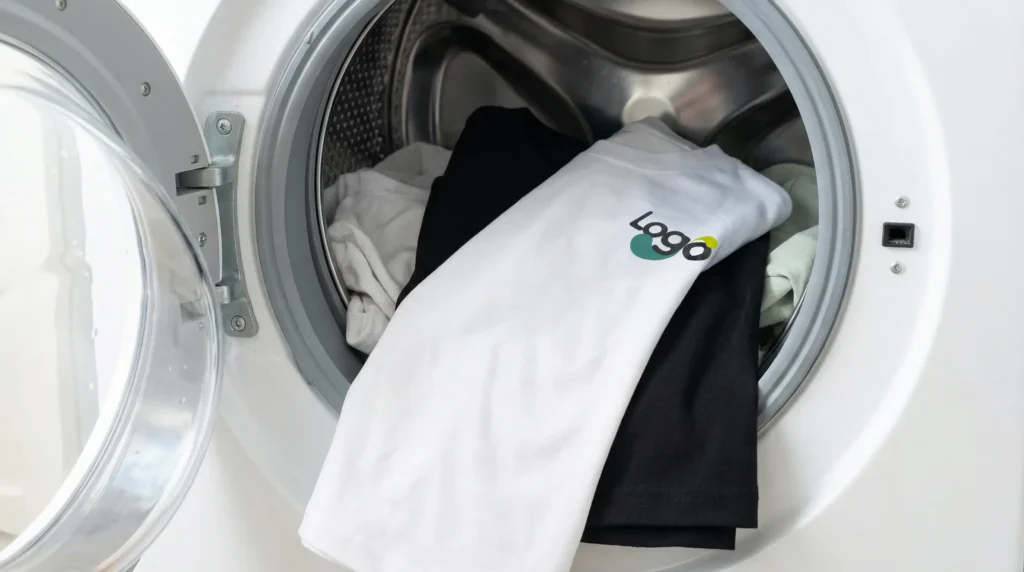
Turn your fabric inside out before washing. This reduces direct rubbing on the embroidery or transfer. Also wash it with other pieces of similar texture to avoid snagging, and always follow the recommendations on the fabric care label.
Drying, ironing and storage
Controlled drying
Do not tumble dry personalised textiles. Drying in the open air, with low exposure to the sun, is enough to preserve the brilliance of the designs and the strength of the fibres.
Risk-free ironing
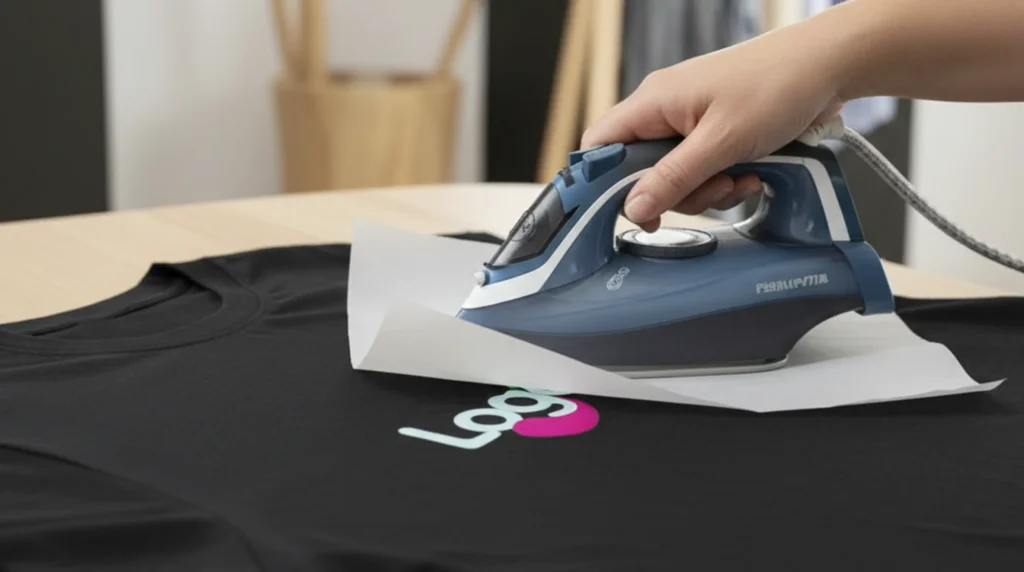
If you have to iron, place a thin cloth between the iron and the personalisation to avoid damaging it. For transfers, you can also use baking paper, which creates an effective protective barrier without sticking to the visual. It is also advisable to iron on the reverse side to avoid any unwanted distortion or shine.
Tips for prolonging life
Store your garments in a dry, well-ventilated area and avoid folding them directly over the personalised areas. This will minimise marks and keep the finish impeccable.
The durability limits of personalised textiles
If a textile transfer design starts to peel off despite careful maintenance, it is sometimes possible to recover it. Here’s how to do it safely:
– Start by laying your textile flat on a stable surface, pattern side up.
– Place a piece of baking paper or a thin cloth directly over the transfer area.
– Set your iron to a medium temperature, without steam. The steam may moisten the area and prevent it from adhering.
– Apply the iron for a few seconds, using even, controlled pressure. The aim is to reactivate the adhesive without overheating the visual.
– Leave to cool before handling the fabric: the glue stabilises as it cools.
If the motif still comes off or certain areas remain uneven, don’t insist: too much heat could permanently damage the personalisation. Bear in mind that personalised textiles naturally have a lifespan: even with careful care, repeated washing, rubbing and the passage of time can end up altering the personalisation. This is part of the normal cycle of a printed garment, and the aim is simply to prolong its life for as long as possible by taking the right precautions.
These few habits will help keep your textiles looking crisp and long-lasting. With the right care, your personalisation will last for years without losing any of its charm.