

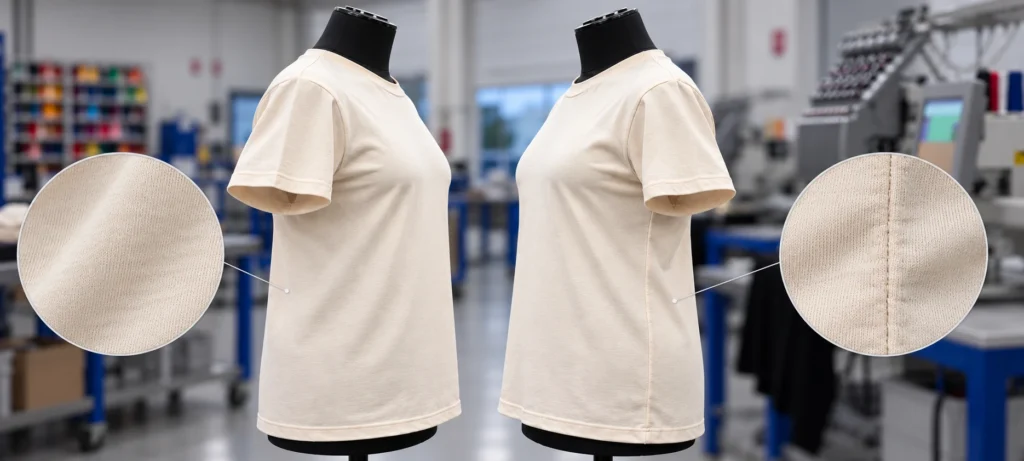
Two T-shirts that look similar may be constructed very differently. One is made as a tube, with no seams at the sides; the other consists of a front and a back joined by side seams. This difference affects the fit, the drape, the comfort and certain customisation options. It is therefore worth considering before comparing the price, available sizes or delivery times for an order of customisable T-shirts.
For an event, a charity or a large order, tubular T-shirts are often recommended for their straight cut and the absence of side seams. For a brand or product where the shape is more important, sewn T-shirts generally offer a more structured construction. Neither is automatically better: check the measurements, weight, stock availability and the intended placement of the design before making your choice.
What is the difference between a tubular T-shirt and a sewn-together T-shirt?
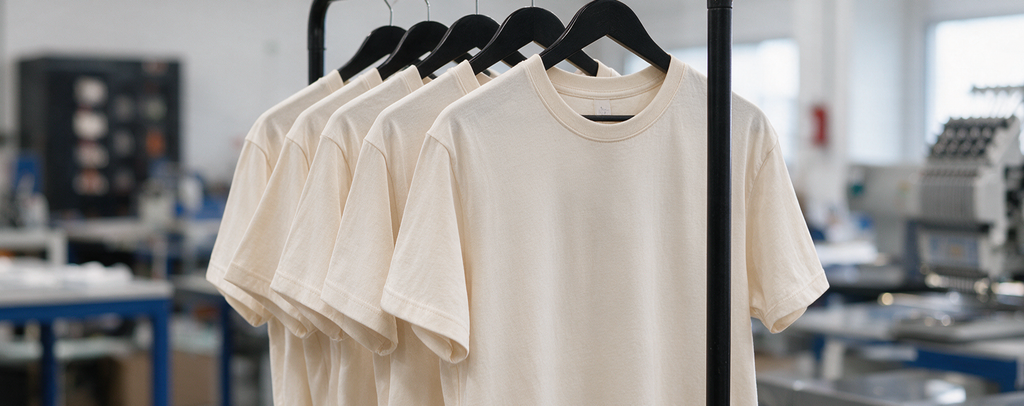
The distinction is based on how the body of the garment is made. It does not, on its own, determine its quality.
What is a tubular T-shirt?
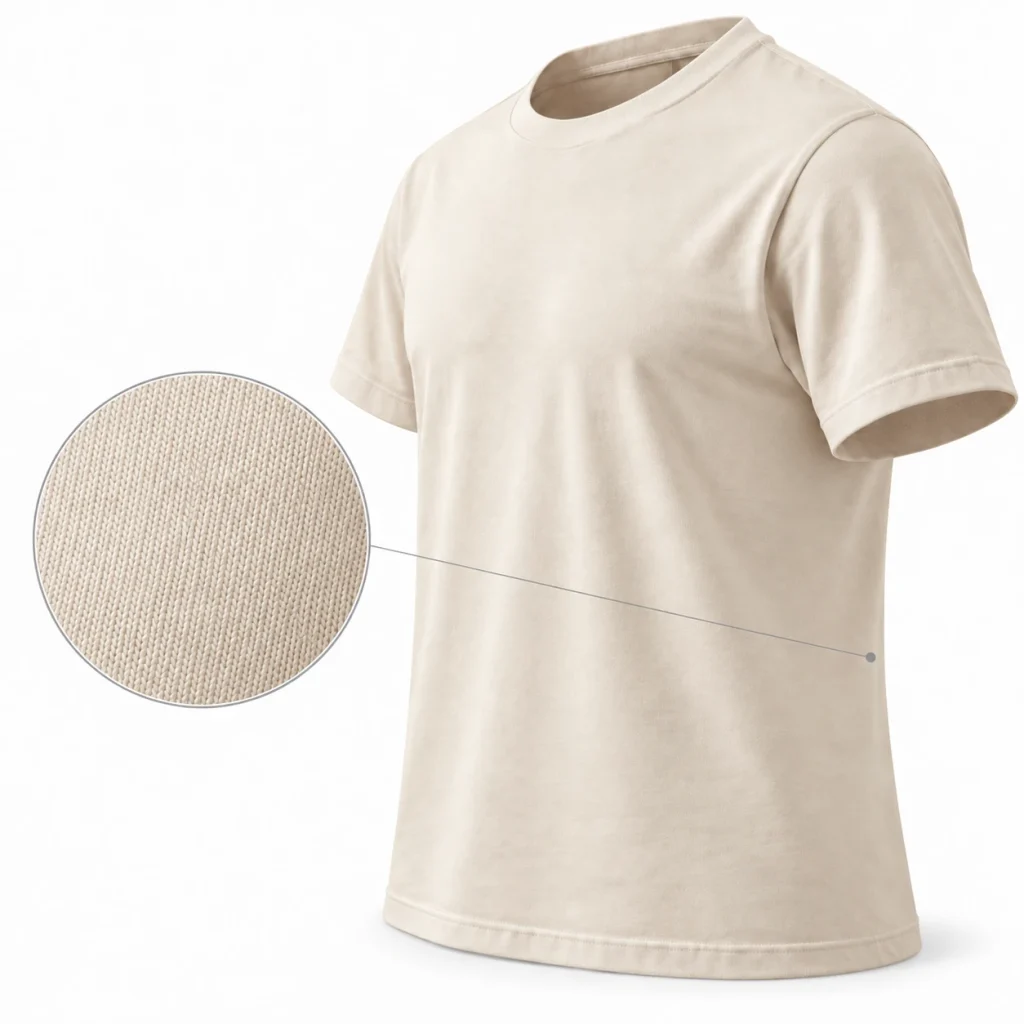
A T-shirt without side seams, also known as a tubular T-shirt, is made from a tube of knitted fabric. The sleeves and neckline are then attached to this main piece.
This construction creates a seamless surface around the bust and prevents any seams from coming into contact with the sides. It is particularly well-suited to straight cuts and is frequently found on designs intended for events, charitable organisations or promotional campaigns.
Depending on the style, however, the fit may be less snug. Before buying, compare the width and length of each size: two tube T-shirts do not necessarily drape in the same way. A size guide is usually available on each product page.
What is a cut-and-sew T-shirt?
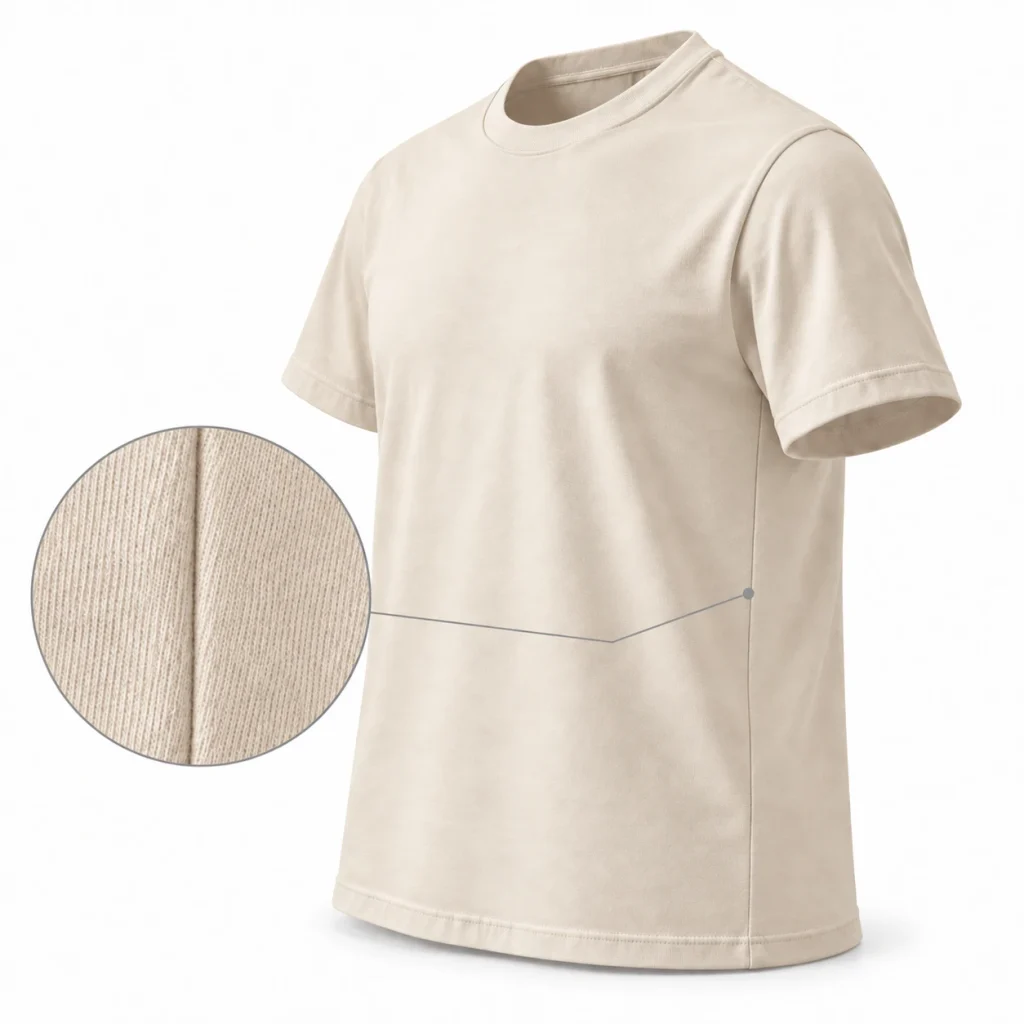
A cut-and-sewn T-shirt is made up of several pieces cut out according to a pattern. In particular, the front and back are joined together at the sides. It is therefore a T-shirt with side seams.
This process generally allows for greater precision when adjusting proportions: bust width, waistline, ease or length. It is often chosen for a clothing collection or a product where the cut plays a direct role in its positioning.
The presence of seams is not automatically a sign of quality. The fabric, weight, collar and finish remain key factors. Seams must also be taken into account when the intended design extends close to the sides.
What practical differences will this make to your project?
The choice is not simply a matter of whether or not there are seams. Various criteria provide a useful basis for comparing the two constructions.
The cut and the drape
The tubular style often has a straight cut, making it suitable for group use or for distribution to a wide range of people. However, its simple shape does not guarantee that it will suit all body types.
A tailored garment generally has a more structured shape thanks to its pattern. It may be suitable for a brand or collection seeking precise proportions. However, please check the size guide: the actual measurements are more reliable than the product description alone.
Comfort
With no side seams, the tubular T-shirt eliminates any contact with seams in that area. This is a feature that can be appreciated when wearing the garment all day long.
A cut-and-sewn design can be just as comfortable if the size and fit are right. The fabric and its weight also affect how it feels when worn.
Textile marking
For a textile print positioned on the chest, in the centre of the front or on the back, both designs may be suitable. The main point to bear in mind is where the design is wide or close to the edges.
A transfer must be applied to a flat surface and must not overlap a seam. This precaution applies in particular to DTF transfers, as any difference in thickness can affect their application and the evenness of the result. If you are personalising the product yourself, the pre-cut TopQuadri® DTF transfer can meet this need by selecting a suitable location.
🎥 A textile brand’s perspective
In an interview published on TH4 Focus, Bernard de Connick, Head of Print-on-Demand Sales at Stanley/Stella, discusses the difference between the two approaches. His insights provide a better understanding of how they influence the cut and positioning of the product. Listen to the podcast exploring the secrets behind Stanley/Stella’s sustainable and premium T-shirts.
Where can I find information on the design?
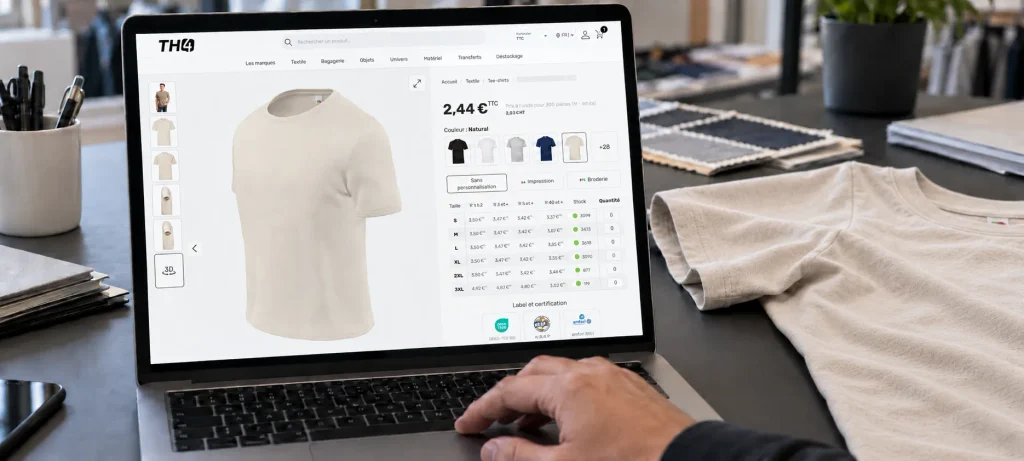
The design is not always clear from the main photo. There are several sources you can check before placing an order.
The product description
Look out for the terms ‘tubular’, ‘no side seams’, ‘cut-and-sewn’ or ‘side seams’. Take this opportunity to check the available sizes, the price based on quantity and stock levels.
The absence of this information does not mean that the T-shirt is tubular. Please refer to the supplementary documentation.
The manufacturer’s technical data sheet
The PDF available on the product page may specify:
- construction;
- the material and the weight;
- the type of cut;
- the finishes;
- dimensions by size;
- care instructions.
The size chart helps you to anticipate the fit. It also enables you to check that a single product code meets the needs of everyone to be kitted out.
3D preview
Available on many TH4 items, the 3D preview allows you to rotate the product. A side view helps you spot a seam running from the bottom of the T-shirt up to the armhole. If there is no such seam, this usually indicates a tubular construction.
This 3D view also allows you to examine the armholes, the collar and the hems. This enables you to better appreciate the garment’s structure and check whether the area intended for the graphic remains flat and sufficiently far away from the seams.
If in doubt, ask for confirmation or order a single copy.
Tubular T-shirts or sewn-in-the-round T-shirts: which is better?
The best model depends on how you intend to use it, the results you’re looking for and your budget.
| Criterion | Tubular T-shirt | Sewn-in T-shirt |
|---|---|---|
| Construction | No side seams | Front and back joined together |
| Standard cut | Often upright | Often more structured |
| Comfort | No joints on the sides | Depends on the finish of the seams |
| A common project | Event, organisation, promotion | Brand, collection, product featured |
| Customisation | Surface with no side seams | Flat area to be preserved |
For an event or a large quantity
Tubular garments are often a good choice when you need to outfit a large number of people with a standard fit whilst keeping costs under control. However, do check the availability of each size: an attractive price isn’t enough if stock levels don’t cover the required quantity.
To create a brand or a collection
The cut-and-sew method is generally recommended when the product’s cut contributes to its styling. Its construction allows for a more precise drape. The limitation is the presence of side seams, which must be taken into account for wide designs. A test order allows you to check the finish before launching the production run.
To personalise the T-shirt yourself
If you are buying an unpersonalised garment, check the available surface area, the armholes and the seams. For a DTF transfer, choose a flat area that is suitable for the dimensions of the design.
TH4 offers both plain T-shirts and customised T-shirts. You can therefore choose a plain garment to customise yourself or order a pre-printed product, depending on your equipment, the quantity required and your deadline.
How do you make the right decision?
Choose a tubular T-shirt if you prefer a straight cut, no side seams, and intend to use it for promotional or group purposes. Opt for a sewn-in-the-round style if the shape of the garment and the precision of its drape are your priorities.
FAQ
Check the sides between the armhole and the bottom hem: a tubular design has no vertical seams. To check this before purchasing, refer to the product description, the technical specifications and the 3D view, where available. The problem with standard photos is that they do not always show the sides. If in doubt, ask for confirmation before ordering.
No. A tailored cut is recommended if you’re looking for a structured silhouette, but its design does not guarantee superior quality. You should also examine the fabric, weight, collar and finish. For a collection, check the measurements for each size and order a sample before confirming a large order.
They do not usually interfere with a design placed on a central, flat area. However, a transfer must not overlap a seam, as the difference in thickness may affect its application. You should therefore check the dimensions of the design and its position on the smallest size ordered. This precaution applies to DTF transfers as well as to any marking requiring a smooth surface.
A tubular T-shirt is often suitable for this purpose, particularly when ordering in large quantities and needing to keep costs down. However, the fit may be less tailored depending on the specific style. Compare the price, size chart, colours in stock and delivery time before making your choice. A cut-and-sewn style remains a good option if you’re looking for a more tailored fit.
No. The weight per square metre refers to the weight of the fabric per unit area; it does not indicate whether the T-shirt is tubular or cut-and-sewn. Use this to assess the thickness and drape, then look for information about the seams separately. The product description, the manufacturer’s technical specifications and the 3D preview allow you to cross-reference this information.