

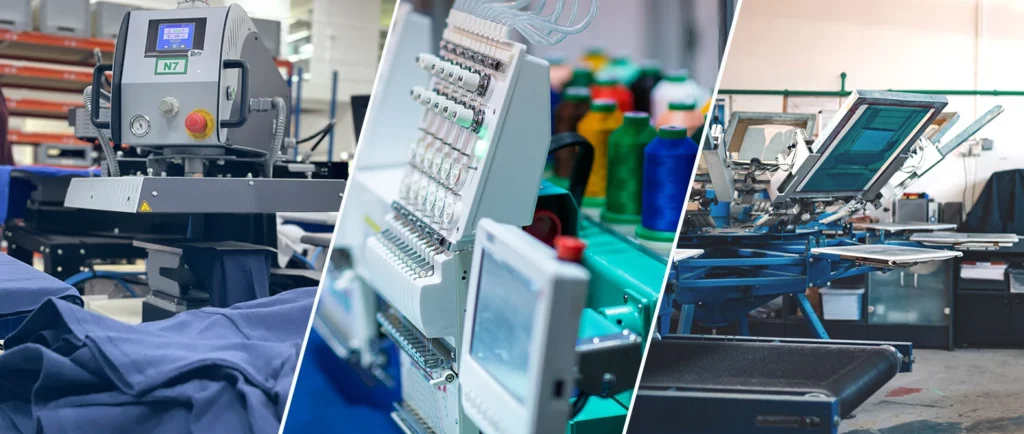
The right textile printing technique depends on the nature of your order: the garment to be personalised, the design to be applied and the quantity to be produced. A company logo, a photograph, a name, a number or a premium finish are not printed in the same way. DTF, embroidery, screen printing, flex or flock: each method has its own strengths, limitations and suitable applications.
Which textile marking technique should you choose?
Before comparing personalisation techniques, start by considering your needs.
An event T-shirt, a corporate polo shirt, sportswear or promotional clothing are subject to different requirements.
Here is a starting point:
- DTF: a highly versatile technique, suitable for both simple and complex designs, whether monochrome or multicoloured, as well as photographs and gradients;
- Embroidery: ideal for a minimalist logo with few colours, offering a premium, durable and raised finish;
- Screen printing: suitable for large quantities with few colours, as each colour requires its own screen;
- Flex: designs with a limited colour palette, metallic, fluorescent or shimmering effects;
- Floc: single-colour designs requiring a velvety finish.
At TH4, you choose your level of customisation. You can order plain textiles if you wish to print on them yourself, or buy customised textiles that are ready to use.
This flexibility means we can cater for:
– branding professionals looking to source supplies from an online textile wholesaler;
– businesses, organisations, agencies and designers who wish to outsource the personalisation directly to a service provider to receive their personalised garments ready for distribution.
💡 TH4 tip
Don’t base your choice solely on the unit price. The right branding depends on three factors: fabric, design and quantity.
TopQuadri® DTF: the most versatile technique
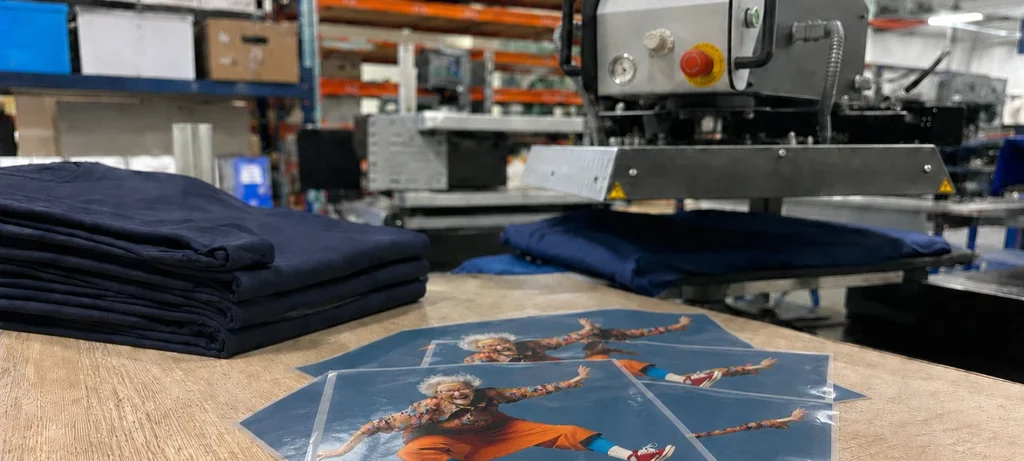
DTF, which stands for ‘Direct To Film’, involves printing a design onto a film and then heat-transferring it onto the fabric.
Its main advantage is its versatility.
TopQuadri® DTF is equally suited to a single-colour logo and a detailed illustration. It’s the ultimate all-round printing solution! It can handle:
- the photos;
- gradients;
- the finer details;
- both monochrome and multicoloured images;
- complex logos;
- orders with multiple formats;
- orders containing several items of clothing.
DTF transfers are often recommended for T-shirts, sweatshirts, hoodies, polo shirts, tote bags, workwear, event merchandise and promotional items.
When it comes to innovation, TH4 goes one step further with TopQuadri®, a technology designed for professional DTF printing that delivers a premium finish thanks to crisp, elegant results that enhance every textile substrate.
It serves two purposes:
– to provide pre-cut, press-ready DTF transfers for professionals who apply the prints themselves;
– to produce personalised textiles for customers who wish to receive pre-printed items.
💡 TH4 tip
Before starting production, always check the print result on the chosen fabric. This step is particularly recommended for polyester, technical fabrics or treated materials.
Embroidery: a premium, long-lasting finish
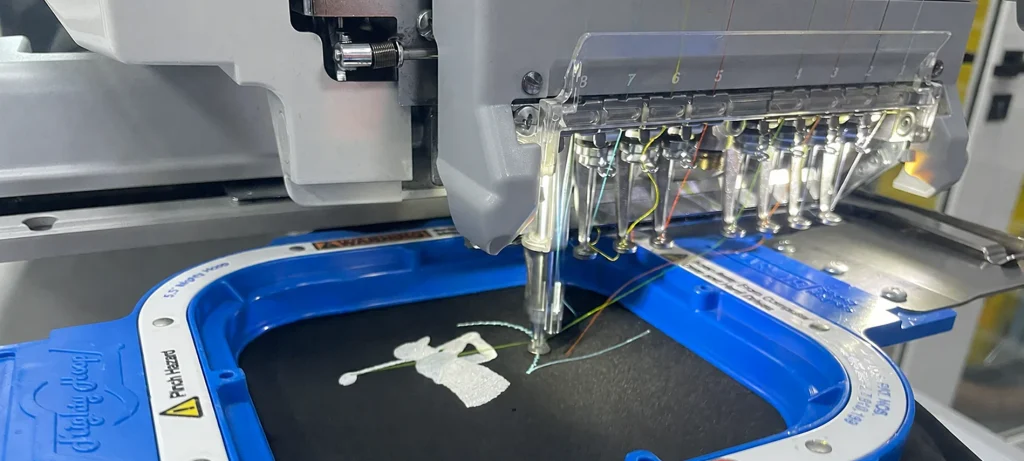
Textile embroidery involves applying a design to fabric using thread. The result is a raised, high-quality and durable finish.
It is particularly suitable for:
- simple or moderately detailed logos;
- visuals with few colours;
- distinct shapes;
- legible texts.
Embroidery has a real limitation: the number of colours in the design and the level of detail. The more small elements a logo contains, the more difficult it can be to reproduce it faithfully. Photographs, colour gradients and very small text are therefore rarely suitable for this technique.
For orders of customised embroidered textiles, TH4 incorporates Embroidery NCM® –which stands for‘Near Colour Match’ – into its customisation process. This technology analyses the shades of your logo and automatically identifies the closest-matching threads from a range of over 300 colours. It helps ensure the embroidered result is more faithful to your visual identity.
💡 TH4 tip
For a beautiful embroidery design, keep the design simple. A clear, uncluttered logo with good contrast will always produce the best result.
Screen printing: crisp colours and uniform solid areas
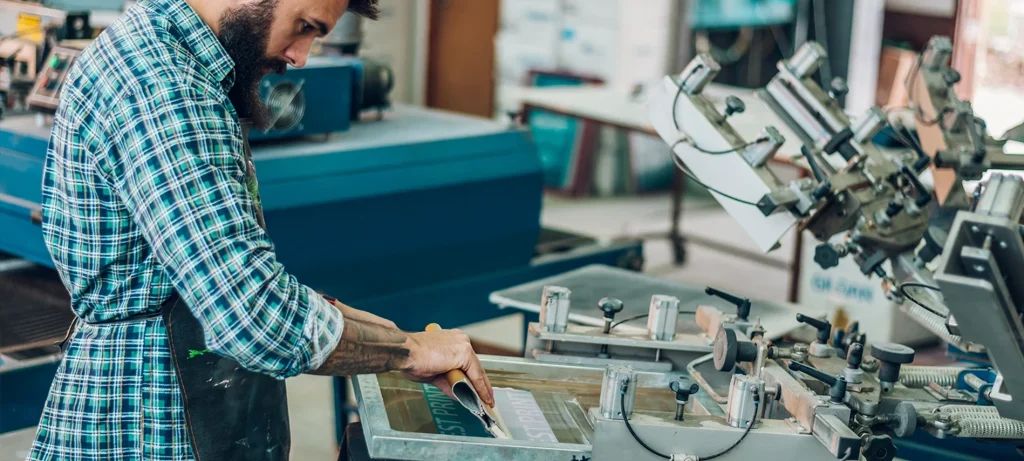
Textile screen printing involves applying ink directly onto the fabric through a screen prepared for each colour. It is a long-established technique for marking textiles.
It can handle intricate designs, but its main limitation remains the number of colours. The more colours there are, the more printing frames need to be prepared. This requires equipment, set-up time and a more complex production process.
It remains relevant for:
- large quantities;
- logos with very few colours;
- solid colours;
- repetitive tasks;
- projects with few variations.
💡 TH4 tip
Use screen printing as your go-to method for large runs with few colours. For a more varied, detailed or time-sensitive project, TopQuadri® DTF is often a better choice.
Flex: a marking technique with a variety of finishes
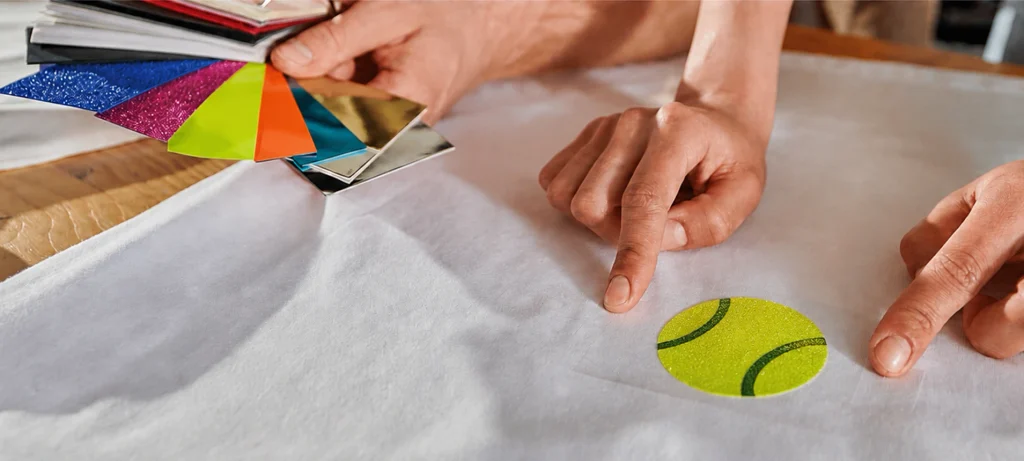
The flex printing technique involves cutting out a heat-activated material and then applying it to the fabric whilst hot. Depending on the type of flex chosen, the finish can be matt, glossy, metallic, fluorescent or glittery.
It is particularly suitable when you are looking for crisp branding with a distinctive effect.
It is suitable for:
- neon, metallic, shiny or glittery effects;
- logos with little detail;
- single-colour markings;
- small-batch productions, each one personalised individually.
Textile flex stands out above all for its finishing effects and for how easy it is to produce in workshops equipped with a cutting plotter.
On the other hand, it is less suitable for photographs, gradients, very fine details and complex, multi-coloured images.
💡 TH4 tip
Choose ‘flex’ if you want simple, die-cut lettering that’s very easy to read, with a special finish: fluorescent, metallic, glossy or glittery.
Floc: the velvety finish of textile printing
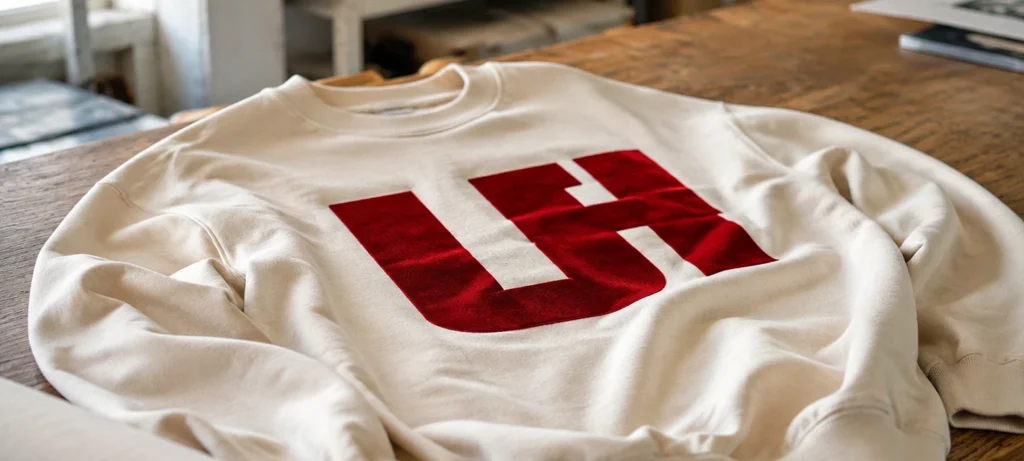
Floc is often confused with flex. However, the finish is different.
Flex has a fairly smooth finish. Floc, on the other hand, has a velvety appearance; it is soft to the touch and has more texture.
Historically, flocking (or floc) involved spraying small textile fibres onto an adhesive applied in a specific pattern. An electrostatic charge caused the fibres to stand on end, creating that highly recognisable velvety finish. Later, plotter-cut flocking made it easier to produce heat-sealed lettering, numbers and simple shapes.
Floc is suitable for:
- velvety-textured markings;
- simple shapes;
- logos with little detail;
- customisations with a more tactile feel.
Choosing a flock finish is particularly appropriate when you want a textured effect, with a softer feel and a distinctive visual appearance.
Its limitations are the same as those of Flex: it is less suitable for gradients, very fine details and complex logos.
💡 TH4 tip
Choose flocking for simple printing with a velvety finish. If your priority is precision, colour or detail, opt for DTF transfer instead.
Comparison table of textile marking techniques
| Technical | Best for | Rendering | Main limitation |
|---|---|---|---|
| TopQuadri® DTF | Photos, colours, details and variants | Clear, precise and true to colour. | Test recommended for certain technical subjects |
| Embroidery | Minimalist logos and a premium finish | Embossed and textured | Fineness of the pattern, size of the elements |
| Screen printing | Large quantities with few colours | Well-established and consistent | Numerous frames and limited flexibility regarding the number of colours |
| Flex | Text, numbers and special effects | Smooth, glossy or metallic | Fine details and gradients |
| Flocking | Simple shapes and textured effects | Soft and velvety | Fine details and gradients |
💡 TH4 tip
Once you’ve chosen your technique, follow the right steps to ensure your print stays looking good after washing. Find out how to wash a personalised garment properly without damaging it.
Conclusion: which marking technique should you choose?
Once you have compared the main techniques, the choice becomes simpler: the right textile printing technique depends on your fabric, your design and the quantity to be produced.
- Choose TopQuadri® DTF for its versatility;
- Choose embroidery for a simple logo with a premium, long-lasting finish;
- Consider screen printing for large quantities with very few colours;
- use Flex for short text, numbers and metallic or neon effects;
- Choose flocking for single-colour markings with a velvety finish.